Followers

Wednesday, May 11, 2022

A PRAYER OF HEALING; A Religious Naturalist Version


Rabbi Rifat Sonsino, Ph.D 

Here is an example of a traditional Jewish prayer for healing:

“Heal me, O Lord, and I shall be healed; save me and I shall be saved; for thou art my praise (Jer. 1714). May it be thy will, O Lord my God, and the God of my fathers, speedily to send from heaven a perfect cure, both spiritual and physical, unto my sickness. Blessed art thou, O Lord, who art the faithful and merciful Healer of all flesh. Amen” (The Authorized Daily Prayer Book, Joseph Hertz, p. 1061) 

          Traditional prayers are addressed to God, with the expectation that the divine will respond favorably. Often, this does not happen. Therefore, many people have searched for ways to reformulate the content of the prayers and, in fact, refocus them in order to make better sense of them and, actually, derive some strength when facing the unknown in a rational matter.

          Here is a prayer of healing that I can recite with clear conscience as a religious naturalist who does not address but simply invoke the divine in life: 

רוח העולם ומקור כל יקום

The spirit of the universe and the source of all existence 

          Life experiences show us that illness and suffering are not punishments, but an inevitable part of the fragility of life itself. Nature has provided our bodies with the means to keep us alive and the means to overcome pain and suffering. We hope these will prove effective when we are down, and that our doctors, nurses and other healers will have the knowledge and the wherewithal to strengthen us when our afflictions become too powerful for us to battle them alone. 

          We invoke God, the energy of the universe, and express our gratitude for every moment we experience good health and wellbeing, and our hope for a speedy recovery. We also think of our friends and relatives who are in pain. In particular, we think of…..(names here). We hope that they will be restored to good health, both physical and spiritual, in due time. We want them to know that we are thinking of them and will keep them in our mind continually. May they see release soon and may we continue to enjoy their company in better times. And for those with a terminal illness, we hope they will have the strength to leave life without much suffering and with a gentle sense of peace. 

Amen.


Friday, April 29, 2022

OUR NEW BOOK: A GOD WE CAN BELIEVE IN

 Rabbi Rifat Sonsino, Ph.D 

A colleague of mine, Rabbi Richard Agler and I have just published a book on theology, entitled A God We Can Believe In. We have also incorporated 25 essays written by other Rabbis and academics. As we state in the Preface: 

          It is self-evident that many of the characterizations of God found in our sacred texts, liturgies, and holidays are replete with images that large numbers of contemporary Jews find neither meaningful nor believable.

          Our annual cycle is filled with references to a Deity who intervenes in history, supernaturally responds to prayers, protects his (sic) faithful and chosen, and executes righteous judgment. In the twenty-first century, such propositions engender doubt and disbelief in rabbis and laypersons alike. At the same time, they are a disincentive to Jewish engagement, commitment, and affiliation.

A God We Can Believe In is a response to this moment. Herein you will find contributions from leading rabbis and academics that articulate paths to Jewish hearts, minds, and souls with God-teachings that are spiritually compelling and intellectually sound.

          Our authors present God in ways that are consistent with the facts that higher learning has established, the principles of reason, and their own life experiences. We are not speaking primarily to academics, but to all inquisitive Jews, and perhaps even non-Jews, who seek to live by these same lights.

          The value and importance of the poetic, the metaphorical, and the ancient religious imagination are vital in Jewish tradition. At the same time, God-language, God-teaching, and God-understanding need to be coherent, comprehensible, and credible if modern Jews are going to hear it.

          In these pages you will find a God that cannot be brushed aside by educated moderns; a God that does not violate the realities of logic or natural law; a God presented in accessible, yet deeply grounded, Jewish language; a God that can be lived with, and lived for.

          Our hope is that this book will help secure a place for a living, non-mythical God at the heart of Jewish life in this generation and in generations to come. We endeavor to strengthen the connections between our people, our faith, and our tradition.

          It is our further goal to impress upon our institutions the need to embrace new and systematic ways of addressing God in formal worship, of hearing God interpreted from the pulpit, of learning about God in classrooms, and of praying to God from future siddurim (“prayerbooks”).

          May our respective strengths strengthen us all— .חזק, חזק, ונתחזק 

          The book is available for sale at Wipf and Stock (www.wipfandstock.com) , the publisher, at  AMAZON and others. 

          Please let us know your reactions.         

Date: April 29, 2022

Wednesday, April 6, 2022

WHAT IS A "COVENANT"?

 Rabbi Rifat Sonsino, Ph.D

 The term “covenant” (from the Latin, con, namely “with”, venire, namely, “to come”) refers to “an agreement enacted between two parties in which one or both promises, under oath, to perform or refrain certain actions stipulated in advance” (ABD, 1/1179). The corresponding term in the Hebrew Bible is berit, coming most likely from the Akkadian  biritu, meaning a clasp or a fetter. The Septuagint (3rd cent. BCE), which is the Greek translation of the Hebrew Bible, renders it as diatheke, meaning “will” or “testament.” Thus, Jews have the so-called “Old Testament” (a Christian term) and Christians have the “New Testament.”

           In the Hebrew Bible, a covenant may be established in two different ways:    a) Between two individuals, such as, the covenant signed between King       Solomon and King Hiram, of the city of Tyre (I K 5:26), or

          b) Between God and human beings, such as the covenant with Noah (Gen. 9:9), or, with Abraham (Gen. 15:18), with Phinehas, the priest (Num. 25: 12), with Joshua and the people (Jos. 24:25), with Jehoiada, the priest, and the people (II K 11:17), with king Hezekiah and the people (II Chr.29:10), with Josiah and the people (II K 23:3), with Ezra and the people (Ezra 10:3), and, the crown jewel, with the people of Israel at Mt. Sinai, through Moses (Ex.19:5). According to the Rabbis, this covenant includes, not only the Ten Commandments but the entire Torah (i.e., all the Hebrew Scriptures as interpreted by the ancient sages).

           The prophet Jeremiah (6th cent BCE), spoke of a “new covenant” that will be signed in the future between God and the Israelites (Jer.31:31), referring, most likely, to the restoration of Israel after the Babylonian exile and the reconstruction of the second Temple (See, Jewish Study Bible, p. 991). Christians, however, reinterpret this passage as a prophecy through Jesus in the New Testament.

           These covenantal documents were mostly modelled after Hittite covenants of Anatolia (2nd millennium BCE), either as parity or suzerainty (see examples in ANET, pp. 201ff). They followed a strict literary format that included the following elements: 1. The identification of the covenant giver; 2. The historical prologue; 3. The stipulations; 4. The provision for deposit and public reading; 5. The list of witnesses to the covenant; and 6. The blessings and curses as a means of enforcement.

          Even though, we have many examples of treaties in the ancient Near East, the idea of covenant between a deity and a people is unknown to us from other cultures. In fact, we can state that this covenantal idea is a special feature of the Israelite religion. Jewish sages of the past used the format of legal documents between individuals and applied it to the special relationship between God and others.

           In reality, the concept of berit between God and Israel is more than an agreement between two parties, and implies an  imposition on the part of the deity, as indicated in the Book of Psalms by the expression, “He has commanded his covenant” (Ps. 111: 9). In so doing, God literally “cuts” (karat) a covenant, as clearly stated in Aramaic as gzr ‘ady, by simply imposing unilaterally a pact on the biblical Israelites. The idiom most likely comes from the ceremony that accompanies the covenant by “cutting” (namely, slaughtering) an animal during a ritual.

           How shall we view this concept in our time?  From the perspective of a non-theistic religious naturalism, where God is conceived as the energy of the universe, the idea of a personal God imposing a covenant is hard to accept. Nature acts as it must according to its own rules, and does not discriminate between people. It would be better, I would argue, to reinterpret the covenant as a sign of our own commitment to a particular way of life. Thus, when we say, God made a covenant with Jews, it really means that we are committing ourselves to the pursuit of the high moral standards espoused by the Torah, the text of the covenant. So, Jews can follow the teachings of the Torah as interpreted by the Rabbis (the so-called The Old Testament) and Christians can follow the teachings of the Gospels (the so- called the New Testament) as interpreted by Christian teachers. And we all respect one another.

 Date: 4/6/22


Tuesday, March 22, 2022

PROBLEMS WITH THE CONCEPT OF "THE CHOSEN PEOPLE"


Rabbi Rifat Sonsino, Ph.D

 Many Jews believe they are God’s chosen people.

 The concept is already in the Hebrew Bible: “Of all the people on earth, the Lord your God chose you to be His treasured people” (Deut. 7: 6b). It was promoted by the prophets: “But you, Israel, My servant, Jacob, whom I have chosen” (Isa. 41:8). It was taken for granted by many medieval Jewish philosophers: Thus, for example, Judah Halevi (12th cent), in his magnum opus, The Kuzari, argued that Jews were special, because they distinguished themselves from other people by godly qualities and attained the high degree of prophecy(1). It is even enshrined in our present liturgy, when a reader of the Torah recites, “Blessed is the Lord our God, Ruler of the Universe, who has chosen us from all peoples by giving us His Torah.”

 The idea was taken over by the early Christians too, as , for example, when I Peter considered the Church “a chosen race, a royal priesthood, a consecrated nation, a people set apart” (2:9).

 Yet, even some Jews in the past realized that this election came in with a heavy responsibility. The Israelites were expected to observe God’s teachings and had to be better than others. As the prophet Amos declares, “You alone have I singled out of all the families of the earth –that is why I will call you to account for all your iniquities” (Amos 3:2, JPS).

 However, the anti-Semitism that Jews faced in the past and even in our time (i.e. the Holocaust), brought into question the veracity of the concept of God’s election of Israel, with some even jokingly suggesting that God, perhaps, should choose another people. Besides, the idea of chosenness smack of self-aggrandizement to assume that Jews were chosen by God.

Consequently, a different interpretation of the concept was proposed.  Thus, for example, Rabbi Eugene Borowitz (d. 2016), stated that “Jews were chosen to serve God through life of special duty, not to receive an abundance of privilege or power.” (2) Similarly, Rabbi Roland Gittelsohn (d.1995), wrote, “We were chosen for special service to God…Not for privilege are we a special people, but for responsibility.” (3)  But it was Rabbi Mordecai Kaplan (d.1983), the founder of the Reconstructionist movement in Judaism, who took a bolder position when he asked that the entire concept be abandoned. At best, he stated, Jews have a “vocation” to pursue truth and righteousness. (4)

 The concept of God’s election of the Israelites may have played an important role in the past, but it is historically and theologically questionable today. It is time to give it up for good. For me, a religious naturalist, the feeling of being chosen has to do with the sense of pride I have in being a Jew. We are, I would argue, not a chosen people but a choosing people, who have opted to follow a certain path dictated by our past sages, and have contributed to the well-being of our society through our teachings of monotheism, our special view on life  and through our contribution to the arts and sciences of all times. That is enough to make me a proud Jew. As we find in the “Statement of Principles for Reform Judaism” (1999), “Partners with God in tikkun olam, repairing the world, we are called to help bring nearer the Messianic age” that represents the best of what can be achieved in our societal life.

 Probably, we also need a new prayer before the Torah reading! How about, “We invoke the divine in life and express gratitude for the opportunity to study and practice Torah”?

 FOOT NOTES:

1.     Judah Halevi, The Kuzari, H. Slonimsky, Schocken, NY, 1964, 1: 103.

2.     Eugene Borowitz, Liberal Judaism, UACH, NY, 1984, 54.

3.     Ronald B. Gittelsohn, Little Lower than the Angels, UACH, NY, 1955, 209, 210.

4.     W. Gunther Plaut, The Growth of Reform Judaism, WUPJ, NY, 1965, 177.

Date: March 22, 22

Sunday, March 20, 2022

                                                                 Short Bio 

Rabbi Rifat Sonsino, LLB., Ph.D.


Rabbi Rifat Sonsino is the Rabbi Emeritus of Temple Beth Shalom in Needham, MA.

Born in Turkey, he received his law degree from the University of Istanbul (Faculty of Law, 1959), his rabbinic ordination from the Hebrew Union College-Jewish Institute of Religion (Cincinnati, 1966) and his Ph.D. from the University of Pennsylvania (Philadelphia, 1975) in the field of Bible and ancient Near Eastern Studies. In 1991 the Hebrew Union College-Jewish Institute of Religion bestowed upon him a D.D.

Before coming to Needham, Rabbi Sonsino served congregations in Buenos Aires, Philadelphia and Chicago. After his retirement from Beth Shalom, he volunteered his services at Bet Shalom, a nascent Reform Jewish congregation in Barcelona, Spain, and other small synagogues in the Iberian Peninsula.

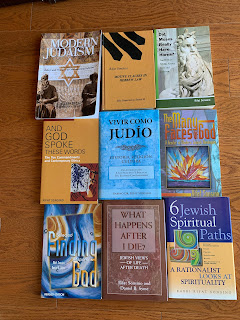
Rabbi Sonsino has authored numerous books and articles, including Motive Clauses in Hebrew Law, Finding God (also with D. Syme) and What Happens After I Die? (also with D. Syme), The Many Faces of God , Modern Judaism, Six Jewish Spiritual Paths, And God Spoke These Words (commentary of the 10 Commandments),  Did Moses Really Have Horns?Vivir Como Judio. He was the editor of the CCAR Journal (1997-2001). Throughout his career, Rabbi Sonsino has chaired various committees, both regionally and nationally. His blog postings (SONSINO’S BLOG) are found in rsonsino.blogspot.com, with over 700,000 viewers around the world. In the past, Rabbi Sonsino taught at Boston College and at Framingham State University, and lectured in many parts of the country and around the world.

Rabbi and Mrs. Sonsino now live at the Willows in Westborough, MA.


Wednesday, March 2, 2022

WHAT SHALL WE EXPECT FROM A PRAYER?


Rabbi Rifat Sonsino, Ph.D

 There are three major types of prayers :

 1.     Petition: This is when we ask God for something specific. Like, “ Oh God, heal her” (Num.12:13)

2.     Praise: This is when we praise God for being God or what God does. Like: “I will praise you with a sincere heart” (Ps. 119: 7)

3.     Thanksgiving: This is when we express gratitude for a blessing received. Such as , “I will give thanks to you, Lord, with all my heart; I will tell of all your wonderful deeds”(Ps. 9:1)

 What should we expect after we utter a prayer? Most people would say, a positive response from the divine. The problem is that often we don’t get an answer. Is it because we did not pray sincerely? Correctly? Or, is it because God denied our pleas? Or, more drastically, is it because there is no one listening to our prayers?

 This becomes critical especially with petitionary prayers when, in desperation, we turn to a higher power, and ask for something concrete. Even the Psalmist is aware of this problem, when he says, “Why, O Lord, do you reject me, Do you hide Your face from me?” (Ps. 88: 15). What should we do if there is no answer?

 When we don’t get a satisfactory response, we are bewildered and disappointed. Maybe, we are expecting too much from prayers.  

 In the Western world, we are under the influence of our particular Roman language and culture. For instance, in Latin, the verb “to pray”  is ORARE, meaning, to beseech, beg, implore, appeal. Already, these terms imply that when we pray to God, we are begging for something concrete, and hope God will say , yes. Whereas in biblical Hebrew, the term for prayer is TEFILLAH, from the verb LEITPALEL, a reflexive form of a verb, basically meaning, to judge oneself, to analyze oneself. In Assyrian, to pray is  karabu, namely, to approach, get near.

 Building on this basic difference, I would reframe the issue by stating that a petionary prayer should be directed, not to an outside power, but to ourselves. Therefore, when we pray for something, we ourselves need to come up with the best answer possible, using all the means available to us. So, for me, the prayer, “heal her,” simply means, ‘Let me find the best sources of healing within my reach.”

 God, as the energy of the universe, will not change the course of nature, just because we pray sincerely. In reality, prayers do not change the world but alters our own understanding of the universe. They give us a new perspective on life. As such, they lead us to search for all the means that nature can provide. In this way, we are not disappointed if the answer is No, because we understand that nature acts according to its own rules and will not make an exception for each person who prays. As the Talmud says, “the world follows its own course” (Avodah zarah, 54b).

 Date: March 2, 2021